221030
Today
- Irregular Ideas newsletter about
- Blog post about the charity-as-a-platform conundrum
- Went for a walk
- Ate ice cream
Tomorrow
- Sprint planning for our first continuous improvement
- GA4 requirements
- Prep for NoBloPoMo
Be more fox
Can you explain why the world is the way it is? How things like the economy works? What things affect how your life turns out? No? Not surprising really.
We all rely on our mental model of the world to understand how it works. It’s how we comprehend the risks we face in the world; emotional, social, financial, physical risks. We want how we perceive the world to be as close to how it actually works as possible so we can make better, safer, decisions.
If we believed that all drivers pay attention to pedestrians and do all that they can to keep them safe, we might not look both ways before crossing the road. If we believed that cryptocurrencies can make us rich, we might invest our life savings in bitcoin. The things we believe about how things work in the world affect the decisions we make.
But we don’t often examine those beliefs or consider how we created them.
Sir Isaiah Berlin, a Russian-British social and political theorist and philosopher, wrote of the metaphor of the fox and the hedgehog. He took the idea from the Greek poet Archilochus who said: ‘The fox knows many things, but the hedgehog knows one big thing.’ These are two ways of looking at the world, of explaining what causes things to be the way they are.
Foxes, so the metaphor goes, know a bit about lots of things. They consider lots of often unrelated and even contradictory ideas and pieces of information as they build up their view of the world. They don’t attempt to make it all fit into a single coherent picture and are sceptical about big explanations. They know that when something happens, it’s because lots of things happened, and the explanation is never simple. Foxes succeed in creating an understanding of how the world works by accepting how complex and uncertain things are.
Hedgehogs, on the other hand, have only one way to deal with the world. They are invested in one big idea, or a single explanation of how things work. They are the experts. When a hedgehog looks at the world they only take in the information that fits their worldview, and they ignore anything else. Hedgehogs win big when the world turns out to actually work the way their big idea said it would, but this is rare.
It isn’t what they think that separates the fox and the hedgehog, it’s how they think.
There might have been a time when our world was slow-moving enough for one big idea about how things worked to be close enough to the reality. That was the time of the hedgehogs. Then, it made sense to have a particularly static view of the world. It made sense to be biased towards what we already believed and be quick to discount information that doesn’t fit. That worldview had conviction and certainty. It felt safe.
But that’s not the world we find ourselves in today.
It’s easy to fall into the trap of the hedgehog. But sticking to a single narrative about the way the world works, especially as our world becomes ever more complex, interconnected and uncertain, makes it almost impossible for our understanding to be even close to how things actually are.
Berlin recognised that thinking about ways of seeing the world as two broad classifications is an over-simplification and, if pressed too hard, becomes absurd. That’s the fox speaking. It says, foxes and hedgehogs might provide an informative way of looking at how we think about the world, but don’t take it as the one big idea to hang everything on. If it’s useful, use it. And when it isn’t, go looking for other points of view.
Being a fox is hard. Being pragmatic about our beliefs, examining our opinions, looking for evidence that our view of the world is incomplete, these are hard things to do. Questioning things, especially things that seem to fit what you already believe, and even more so if everyone around you agrees risks confusion and uncertainty. But, it is essential to continually reassess and recalibrate our understanding of how the world works if we want a worldview that helps us deal with the modern world.
Be more fox.
The platform charity conundrum
We could say that they are broadly two ways organisations create value: pipelines and platforms.
Pipelines are the traditional business model of every organisation prior to the invention of the internet and of many to this day. They takes resources in one end, process them in some way that makes them more valuable, and push them out the other end for customers to buy. The same process applies whether the organisation is processing buried coal into power station fuel, silicon into microchips, or as a charity does, someone who needs help into someone who doesn’t.
Platforms are modern business models. They require data and the ability to match uniqueness, e.g., Ebay matching unique second-hand items with a buyer or AirBnB matching unique places to stay with people wanting to book a room. They rely on the network effects enabled by the internet to be self-reinforcing. The famous Uber napkin sketch (below) shows how as one part of the business increases it drives increases elsewhere. This is the power of platform business models.

The challenge, in creating a platform business model for a charity, is the inherent self-reinforcing aspect. A truly self-reinforcing platform charity would be increasing the number of people that need it’s help, but the purpose of a charity is to decrease the number of people that need help.

The diagram above is by no means a perfect representation of how a platform charity would operate, but shows the issue of by growing to provide more services/help people, the charity lessens the need, which reduces awareness of the problem, which in turn would reduce funding, etc. To fully make use of a platform model, the charity should be trying to increase the need for it’s services, but that isn’t a morally acceptable position for a charity.
So, this is the charity-as-a-platform conundrum. More thinking required to figure out if a charity could operate as a platform.
Thinking about a system-shifting approach to new product development
I’ve been thinking for a while now about a) the limitations of most product development models and b) how product management could/should play a role in systems change.
Most new product development models are essentially linear (although some of the issues with that are down to how the model is drawn rather than how it is put into practice) as they describe a manufacturing approach to product development that is increasingly unfit for an uncertain modern digital world.
Most product management practice is informed by the history and narrative of user-centred design, which is increasingly recognised as problematic in how it places the needs of individuals ahead of the needs of society and planet. It fails to recognise the interconnected complexities of the modern world, especially unintended consequences and externalities.
So, I’m interested in thinking about how a new product development process could be based on complex adaptive systems thinking, rather than a manufacturing mindset, and aim to create things that leverage change in systems rather affect individual user behaviour. My thinking is informed by the systems-shifting design report, the systemic design toolkit, and the mobius outcome delivery, with a bit of Theory of Change too.
This is my first attempt at describing what a system-shifting new product development process might look like. It’s a long way from from being well-refined, but it’s useful for exploring some ideas. The key mindset shift is away from building software to shifting systems (with building software as one mechanisms that might cause the shift).
1: Identify the actors

Actors can be individuals, communities, organisations, even objects.
What problems do these actors face?
Centres those with lived experience, but is consciously not user-centred.
2: Map the systems those actors interact with

Understand the problems the actors face and cause.
3: Define the future state of the system

Create a theory of change for the system.
What might it look like if our interventions are successful?
4: Design the mechanisms of change
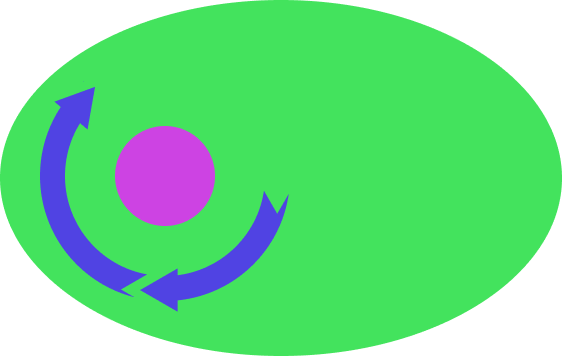
Might be software products that create a change of behaviour among actors, or incentives and process changes.
Designed holistically, with an eye on unintended consequences.
5: Build the mechanisms of change

Creating the things that will cause change.
6: Intervening in the system

The mechanisms of change interact with the system.
7: Measuring the change

Measuring the effects on the system, looking out for unintended consequences.
8: Feedback into the system

Feedback into the mechanisms of change to improve them.
Feedback into the system intervention.
Feedback into design on the future system.
The changed system now informs future change.
Next: Thinking about the tools and activities for each section.
Weeknotes 326
Did
Tech strategy
Worked on a strategy for making choices about which technologies to use in different situations and to help us deal with the grey area between buying commercial-off-the-shelf and building on our own tech stack.
Down with dogmatism
This week’s Irregular Ideas was about creating a social safety net for open-mindedness that helps us change our minds.
ThingsIveReadRecently
I read 20 things about roadmaps, altruism, systems, agility, product management, climate, bees, anti-racism, autism, design and non-profits.
October retro & November delivery plan
Wrote my retro for October and delivery plan for November.
Read:
Better Value Sooner Safer Happier
The Design System lifecycle: it’s simply push and pull
This explanation of how design systems can be used to pull information into the product development process and push information back is really interesting.
Product management principles
I have mixed feelings about principles, but these product management principles from dxw are pretty cool.
Thought about:
Consistent or creative
I’ve been thinking about two modes of working; one that uses a standardised, repeatable process to reach a known output, and one that uses more creative approaches for vague and uncertain outputs. It seems obvious when either should be applied
NoBloPoMo
It’s almost November so I’m going to try to write a short blog post every day of the month like last year.
Retrospective October 2022
The lesson for this month; two ways of working complement each other, scheduled with a clear definition of done and vague with uncertain output.
Contributing to the digital transformation of the non-profit sector
Working at a national non-profit organisation to embed product thinking and practice
Be a better manager
Started working with a coach to try to help me understand what success looks like for me as a manager and how I can support the team better. It’s given me a lot to think about.
One-to-ones with the team were less effective than I’d like but I’m getting back on track.
Build better products
Began thinking about a technology strategy and talked a bit about improving testing.
Create a better environment
Didn’t do much this month on improving the environment.
Deliver projects faster
Worked on quite a few projects, and thought about how too much work in progress affects time to value.
Participating in online communities for social good, innovation, product and digital
Didn’t do anything on this goal.
Continually developing my knowledge, skills and practice
Formal education
Still haven’t done anything on my BSL course or the Gitlab Remote Working course.
Informal learning
Didn’t work on any of my side-projects.
Irregular Ideas has 61 subscribers and 73 posts. I’ve haven’t finished adding images to old editions on Substack or added the domain name.
Wrote a few Twitter threads from my weekly reading list. Carried on with my digital/product/charity twitter thread experiment. No results yet.
Reflective practice
I wrote weeknotes on schedule every week and daynotes some days.
Did a bit writing by hand to help me think through some strategy problems.
Leading an intentional life
Lifestyle
Nomadic coastline life was good. Spent a few weeks inland but with good reason.
Health & well-being
Walked most days, but didn’t go running.
Financial independence
Runaway good.